Grand and Generous

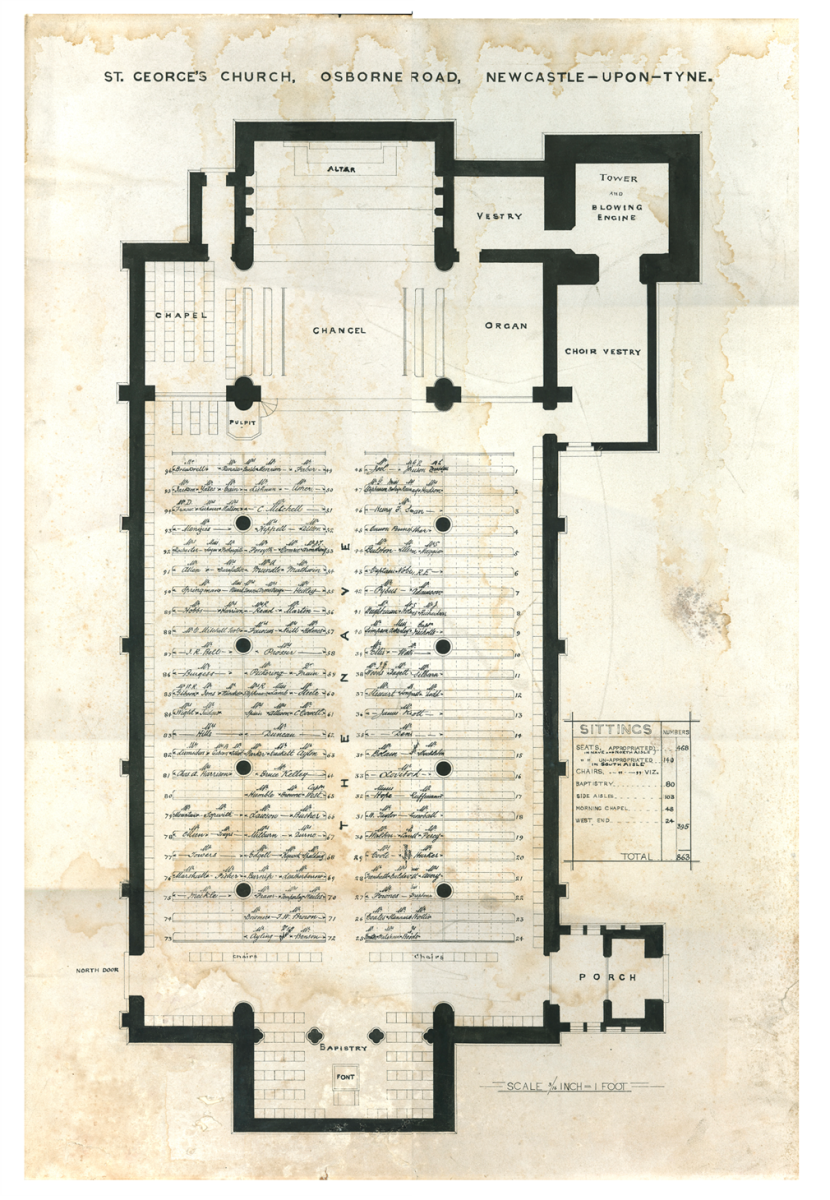
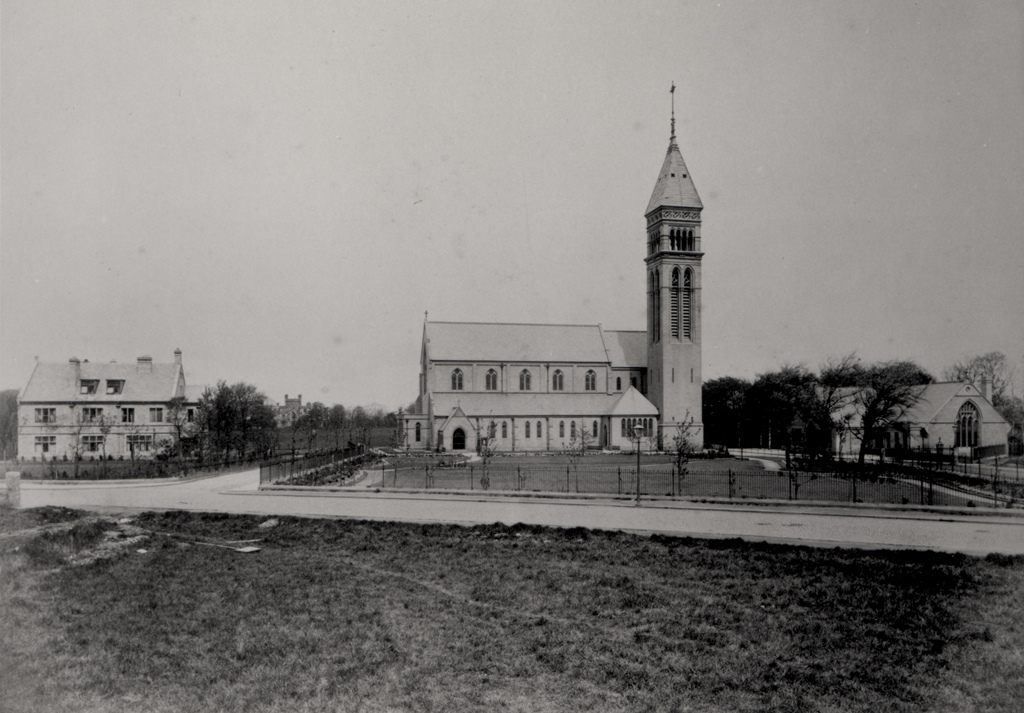
St George’s is a landmark Anglican church that looks out across the Newcastle suburb of Jesmond. Built in 1888, it has witnessed the evolution of the area and the lives of the people who have called it home ever since.

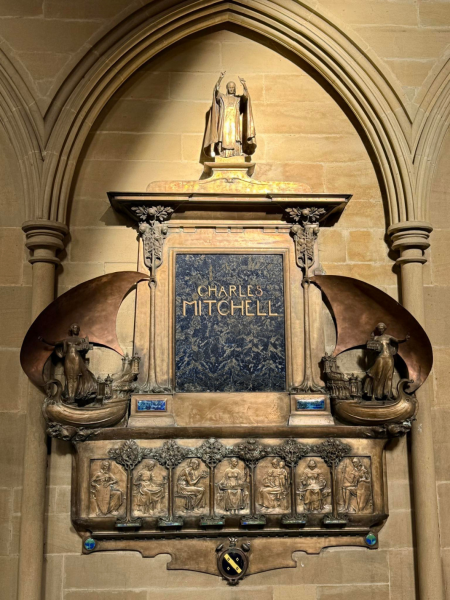
Charles Mitchel Plaque

A thank you plaque to Charles Mitchell inside St George’s.

As the local population expanded rapidly in the 19th century, it was decided that a new church should be built in the north of the suburb, complementing Jesmond United Reformed Church towards the south and serving the growing Anglican community.

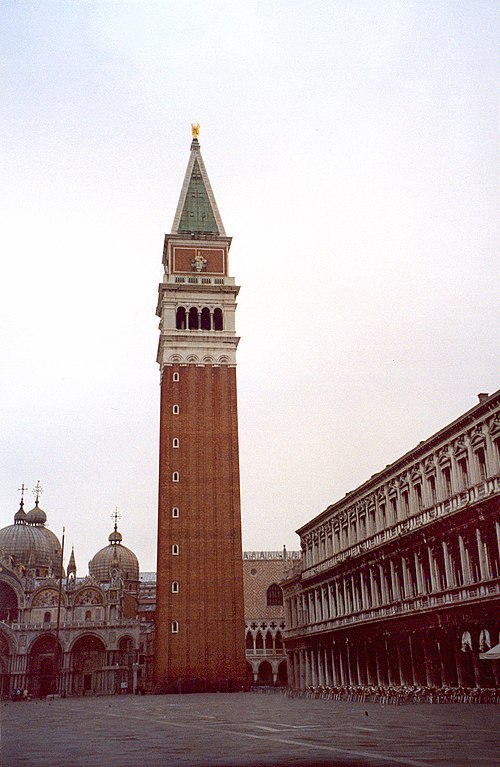
St George’s was funded in its entirety by Charles Mitchell, a Scottish engineer who had made his fortune shipbuilding on the Tyne, and lived a few steps away from here. He commissioned local architect Thomas Ralph Spence to design the church, whose imposing tower echoes the campanile of St Mark’s in Venice. Spence also drew inspiration from the Arts & Crafts movement, a style popular at the time that promoted traditional craftsmanship and natural forms.

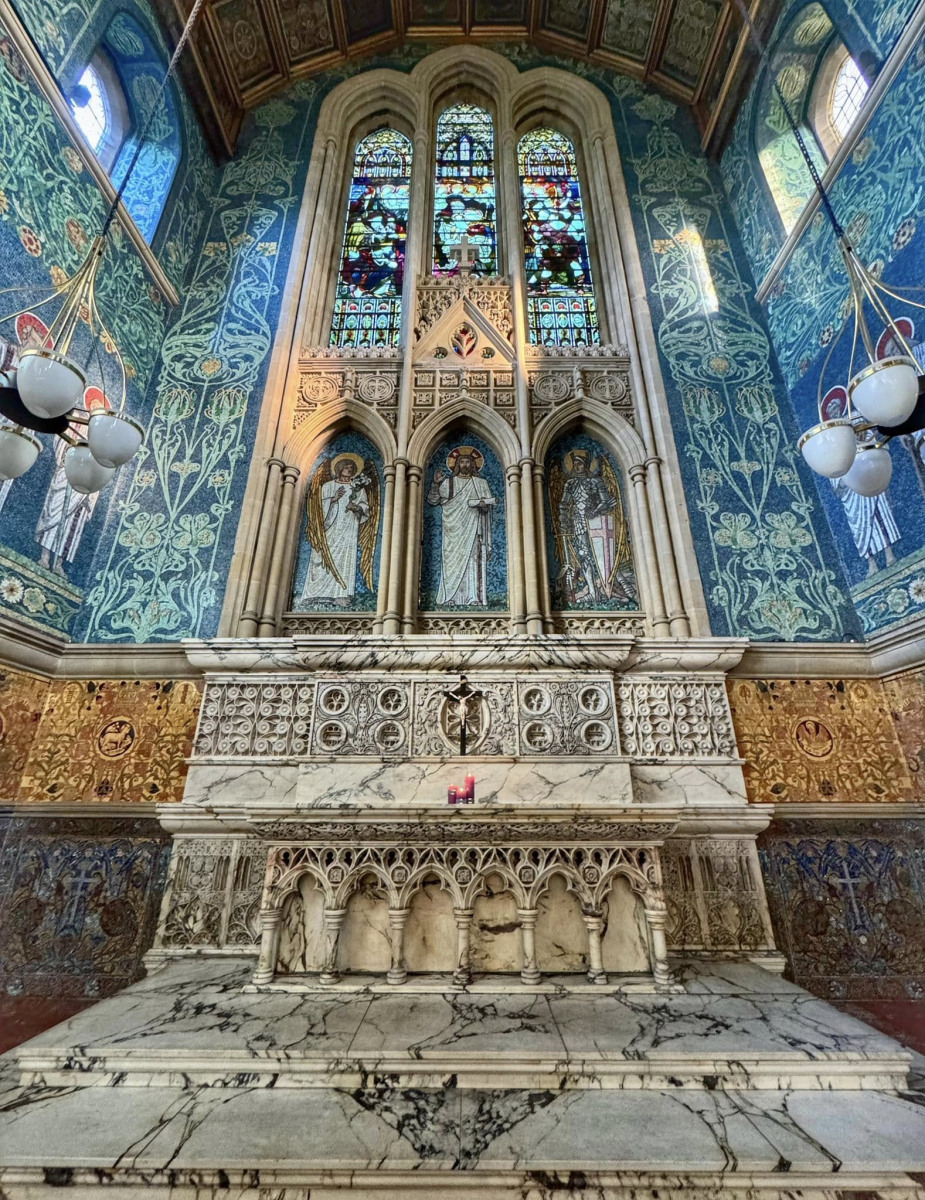
Inside the church, you’ll find a daring interior crafted by many influential makers. There are opulent mosaics, made of blue, gold, and turquoise tiles that form a collage of stories from the Bible, interwoven with the natural motifs favoured by the Arts & Crafts movement. See if you can spot the lilies, peacock or the palm leaves. The ornate marble altar rises on the east wall, meeting the dazzling stained-glass windows that flood the space with light.

To the right is the organ, which has stood there throughout the church’s history. It was built by the renowned organ builder TC Lewis and is one of the finest examples of his work in the Northeast. In fact, before being installed in the church, this organ was displayed at the 1887 Royal Mining, Engineering and Industrial Jubilee Exhibition, as part of the region’s celebrations of its industrial success. Over the next few years, the Discover Jesmond 1888 project hopes to restore the organ to its former glory.
Gallery

Famous Visitors

The playwright, George Bernard Shaw, once visited the church:

‘I was lately walking in a polite suburb of Newcastle, when I saw a church – a new church – with of all things, a detached campanile; at sight of which, I could not help exclaiming profanely: “How the deuce did you find your way to Newcastle?” So I went in, and after examining the place with much astonishment, addressed myself to the sexton, who happened to be about. I asked him who built the church, and he gave me the name of Mr. Mitchell, who turned out, however, to be the pious founder – a shipbuilder prince, with some just notion of his princely function. But this was not what I wanted to know; so I asked who was the – the word stuck in my throat a little – the architect. He it appeared was one Spence. “Was that part of his design?” said I. “Yes” said the sexton, with a certain surliness, as if he suspected me of disapproving. “The ironwork is good,” I remarked, to appease him; “who did that?” “Mr. Spence did”. “Who carved that wooden figure of St. George?” (the patron saint of the edifice). “Mr. Spence did”. “Who painted those four panels in the dado with figures in oil?” “Mr. Spence did: he meant them to be at intervals round the church, but we put them all together by mistake”. “Then perhaps he designed the stained windows, too?” “Yes, most of ‟em”. I got so irritated at this – feeling that Spence was going too far – that I remarked sarcastically that no doubt Mr. Spence designed Mr. Mitchell‟s ships as well, which turned out to be the case as far as the cabins were concerned‟. Clearly, this Mr. Spence is an artist-craftsman with a vengeance’.

G.B. Shaw: On Going to Church. An Article (1896)

George Bernard Shaw

Shaw’s commentary was originally published in the Savoy (an illustrated periodical) in January 1896. Read the rest of Shaw’s commentary here.

St George’s Church

Visit the church’s own website.

About Us

To find out more about the Discover Jesmond 1888 project, what role St George’s plays and the plans for the Organ visit our About Us Page.

Suburban Dystopia

The Russian writer Yevgeny Zamyatin lived here after fleeing revolution and censorship in his homeland. In England, he rebuilt his…

Read More

Light & Memory

Set in the south of the suburb is Jesmond United Reformed Church, a protestant church that bookends this trail with St George’s to the north.

Read More

A Long Way West

This area of Jesmond, with its Victorian terraces overlooking the Town Moor and Exhibition Park, is known as Brandling Village.…

Read More