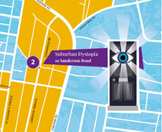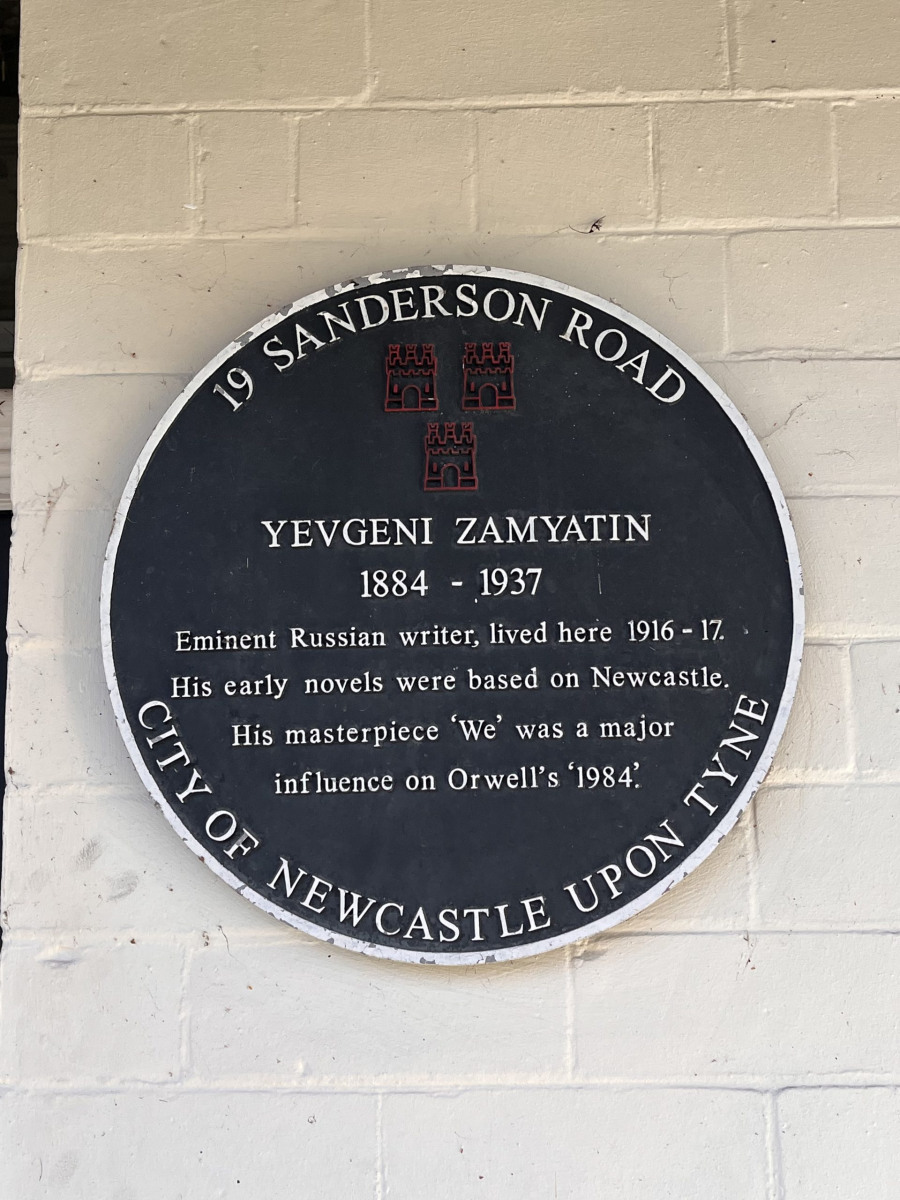
Black Plaque on 19 Sanderson Road
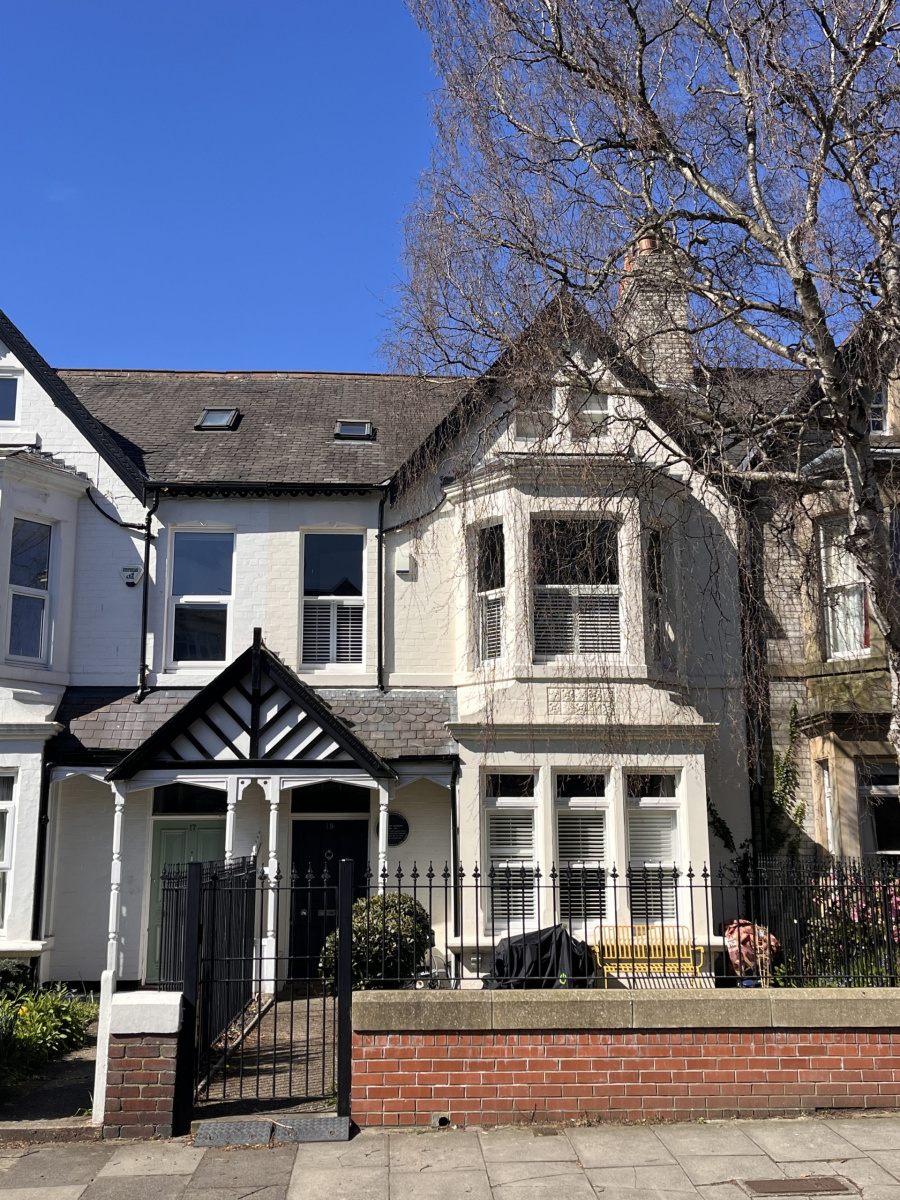
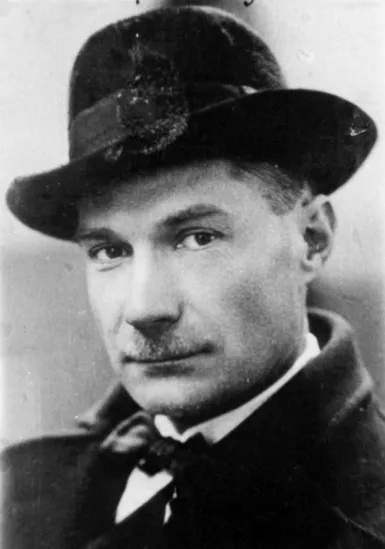
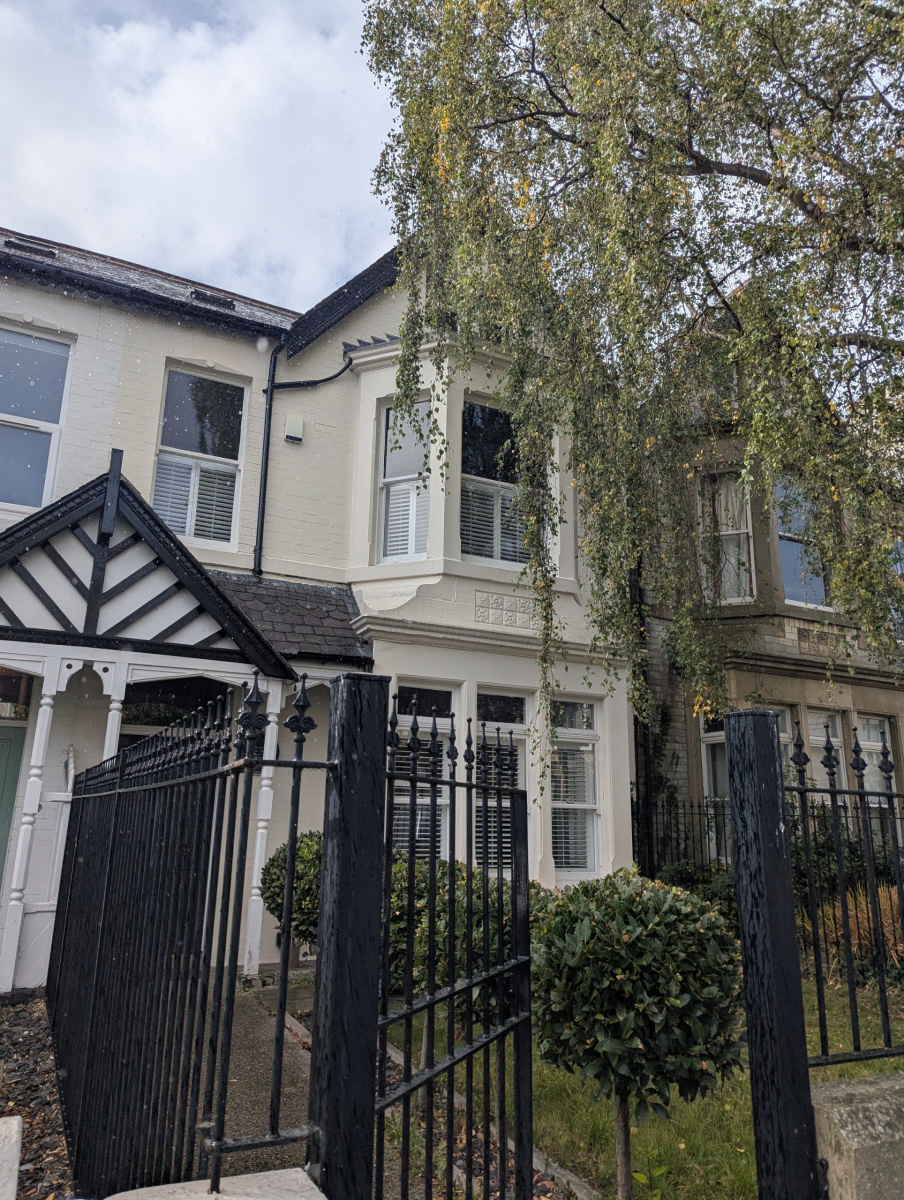
Marked with a black plaque, 19 Sanderson Road is the former home of a literary great. This was where the Russian writer Yevgeny Zamyatin lived, best known for his novel ‘We’. Set in the distant future, ‘We’ is a dystopian story whose main character, a spacecraft engineer called D-503, lives in the ‘one state’ – a city made of glass, where every citizen exists under constant surveillance.
Zamyatin, a Bolshevik sympathiser, was arrested and exiled within Russia several times for his revolutionary activities. In 1916, he was sent to England to supervise the construction of icebreaker ships for the Russian Government, working on the Walker and Wallsend shipyards. It was during that time that he lived in this house, and reflecting on the experience, he later said.
“In England, I built ships, looked at ruined castles, listened to the thud of bombs dropped by German Zeppelins, and wrote The Islanders.”
This refers to his short stories The Islanders & The Fisher of Men, written about the local Jesmond community. In them, Zamyatin gently poked fun at what he saw as a British attachment to middle-class conformity and efficiency. In this excerpt, he writes:
“For Sunday in Jesmond the stone thresholds of the houses, as always, were scraped to a blinding whiteness. The houses are elderly, sooted, but the white stripes of the thresholds sparkled like the false teeth of the Sunday gentlemen. The Sunday gentlemen, as is known, were manufactured in one of the Jesmond factories, and on Sunday morning they appeared on the streets in thousands of copies. All with identical walking sticks and in identical top hats, the Sunday gentlemen with false teeth respectably strolled along the streets and greeted their double.”
Zamyatin later returned to Russia after the 1917 Revolution had swept away the Tsar and ended centuries of imperial rule. There he completed his novel ‘We’ in 1921 , but the book first appeared in 1924 in an English translation, after falling foul of state censors. It was published in the Soviet Union nearly 30 years later, by which point it had already had a huge influence on Western readers. Among the works it helped inspire was one of the 20th century’s most celebrated novels, ‘1984’ by George Orwell. Orwell’s wife, Eileen Blair, herself a writer, was born in South Shields and is buried in St Andrew’s cemetery here in Jesmond. Her poem ‘End of the Century, 1984’ may have also influenced Orwell, but like many women throughout history, her achievements have often received less recognition than they deserve.